
When God Talked Back
What if...


This essay is written because our moment demands a clear answer to the question of what it means to be human. AI does not pray. It does not ache, wait, or speak into silence hoping to be heard. This piece is one small witness to what artificial intimacy will never give us. For another reflection on this theme, see “What Artificial Intimacy Will Never Give You,” a story about two divinity school students and their search for real love. Read it and more reflections on my website, robinjunkerboyce.substack.com.
I don’t exactly understand how prayer works, only that I am supposed to do it.
Most of the time, my prayer practice aligns with the Buddhists, finding home in the holy silence where God dwells. I’m good there.
But my roots are Italian, and sometimes when I pray, I want more. I want prayer to be a good conversation over a delicious meal served with wine or something clean and sparkly. The kind of dinner I grew up with, where everyone is talking at once, arguing and laughing, certain the world can be put right if we just stay at the table a little longer.
I want to sit across from God like that. I ask questions. God answers. I laugh. God smiles and nods. I say something off. I get the head tilt. We linger there, sip our wine, savor the next bite of chicken cutlet parmesan.
But that’s rarely how it goes.
Still, I do know this: once, in the ordinary quiet of a movie theater parking lot, I asked God for something, and God answered.
At the time, I was serving in full-time ministry in central Vermont, widowed, raising a toddler and a preschooler.
During my husband’s illness, with the exception of spoken grace at family meals, my prayer life outside of public worship narrowed almost entirely to silent meditation. My words felt too heavy to rise, too laden with loss to reach the heavens. And so, unable to lift them, I disciplined myself in the ancient rhythm of breath and stillness.
There, I met an ordered universe that, in some strange way, organized me. It held me upright, shoulders back, as I moved along a difficult yet predictable path. But when it was over and we had passed through that narrow, sacred portal, the landscape changed. No longer a midwife to a departure, I was now a widow without a map. The peaceful silences of meditation, once steady and sheltering, were no longer enough to guide me through the wreckage of grief.
I needed more.
I needed the full-blown wild world of enchantment and all its reinforcements: the communion of saints, Moses’ burning bush, Arjuna’s thousand suns, Shiva’s cosmic dance of fire. I needed that invisible cosmic realm to somehow speak to me and confirm that the God I claimed to love existed somewhere beyond my own imagination.
If I had once prayed like a Quaker, eyes closed, waiting for God in the quiet, I now lifted my eyes to the heavens in abandon and, like a good Pentecostal, prayed with urgency, expectancy, and fire.
I prayed while pouring coffee, driving children to school, planning youth groups, and preaching to a congregation I loved. I brought everything with me: grief and fury, hope and bargaining, my need for guidance. I asked angels to stay close. I spoke about anything and everything.
And I was prepared for defeat.
If the heavens remained silent, and the God I claimed to love was nothing but a figment of my imagination, well then, I would accept it. The light in my own heart would be enough to illuminate a human path toward survival.
Then God Talked Back
It was on a Sunday afternoon. I drove southeast under a cold February sky to my parents’ home on the shore, seeking refuge from bone-deep exhaustion. I dropped the children off, grateful beyond words for the shelter, and then headed alone to the small local movie theater for a late matinee. Slumdog Millionaire was playing. I had read about the casting of children from the slums of Mumbai, about how remarkable their performances were.
I went in eager, not prepared for what I would witness.
The images were grueling. Children orphaned by violence. Children scavenging in massive refuse heaps that served as both their cafeteria and playground, only to be lured away by traffickers. Children imprisoned and exploited for money and sex. Children maimed, eyes gouged out, rendered more profitable as beggars.
And still, the infectious soundtrack pulled me forward. Its high-energy backbeat somehow kept the images from breaking me. The notes carried me like a kayak on fast water. Its momentum wouldn’t let despair settle in. And beneath the images of brutality, I felt a familiar feeling: the pulse of resilience, the stubborn will to survive even the most innocent suffering.
Sitting there in the semi-empty theater, my eyes fixed on the screen, my mind braided image with memory. The orphaned, suffering children blurred with the sound of my son’s bedtime screams for his daddy.
I felt it in my marrow. I shivered with resignation and despair. The overwhelming pain of Mother Earth bearing her children in abundance and depriving them all the same pressed in on me at once. I saw my own consternation mirrored there too, my longing to heal the world alongside the unbearable limits of what my love can hold.
And then the credits rolled.
The music stopped.
The theater emptied. I stayed in my seat, back aching against the cracked vinyl of an old 1980s theater chair, tears streaming down my face, crushed by the distance. I was eight thousand miles away from wrapping my arms around those children.
I walked to my car, stunned.
Then something in me ignited.
It was primal. Protective. Beyond reason, and yet profoundly steady. Not the practiced stillness I had trained for, but something just as upright. As in labor, my body moved ahead of the mind. I felt an overwhelming desire to reach for them, to gather them into my arms. Certainty gripped me. I could ease their pain, if only for a few minutes. I could rock them with a love that is ancient and absolute. I could tell them what they already knew deep down, what no cruelty could fully erase: that they are loved by an everlasting love.
But they weren’t here, and I wasn’t there.
I sat in the empty parking lot and everything blew out of me at once. Grief and rage tore through my chest, unchecked, uncontained.
“You tell me! You tell me how my little life in small town Vermont could ever touch the lives of those children! Tell me!
I am nothing! So insignificant!
Does any of this matter to you at all? You tell me!”
I was weeping. Snot running down my face. Breathing hard. My fist hit the dashboard. I folded forward over the steering wheel, arms crossed, head down.
Sobbing. Waiting.
And nothing happened.
No voice from the sky. No warmth emanating from the back seat. No rush of reassurance. Just the quiet hum of the engine and my own breath slowing as the words settled.
So I did what most of us do when we don’t know what else to do.
I reached for my phone.
I had one missed call and a voicemail.
It was from a young college student named Liam.
I had not heard from him in years. He had been one of the teenagers in my youth group when I first began ministry in Vermont. Bright. Serious. Thoughtful. He was now studying political science and peace and justice.
I listened.
“Hey, Robin. It’s Liam. Long time no talk. Give me a call when you can.”
Still sitting in the car, I called him back.
He answered. He asked me how I was doing.
“To be honest, Liam, I’m a mess. I just walked out of Slumdog Millionaire. I’m sitting in a parking lot and I am just... I’m heartbroken. To see what happens to those children in the slums of Mumbai, the exploitation... It’s more than I can bear. I feel so small. I feel useless.”
There was a long, calm silence on the other end of the line. Then Liam spoke.
“That’s really interesting, Robin,” he said. “Because that’s actually why I’m calling you. I’m going to India this summer. I’m going to work in an orphanage for children rescued from the red-light districts…one of Mother Teresa’s homes in Calcutta.”
I went quiet.
“And I realized,” he continued, “that I wouldn’t be doing this if it weren’t for you. For what you showed us when I was younger. You know, bringing us to Boston to work with the urban homeless, helping us see the lives of people on the margins. Those experiences changed me. This feels like the next step. So I just wanted you to know.”
I sat there in the parking lot, phone pressed to my ear, unable to speak.
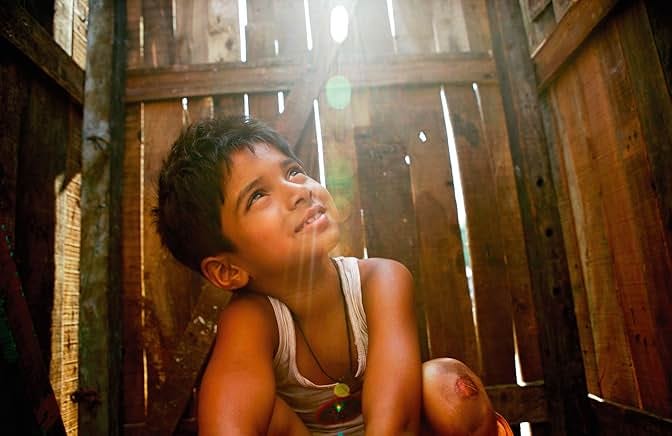
Prayer does not guarantee outcomes. It never has.
Many prayers go unanswered.
Many children still suffer even when we pray for them.
But I have wondered, over the years, why this prayer was answered. And it makes me wonder about the Catholic tradition of God’s preferential option for the poor. I’ve never been entirely comfortable with it. I’ve always believed God loves everyone fiercely, without hierarchy.
And yet.
What if God truly does favor the poor?
What if God, like so many of us, hates innocent suffering?
What if God’s heart bends first toward the innocent, the violated, the forgotten, like a sunflower toward the sun?
What if God favors the poverty in you? The places in you that your terrified to name or think about, let alone share with the world…
Needless to say, after that, I felt like I couldn't just up and quit working for God. Because I’m needed. And so are you. Because God told me that the small acts of kindness, the dedications that seem so insignificant, that you do each day…the smile when you don’t want to, the life of helping another, even when it seems so small an act, not worthy of thought. Those acts of love reverberate out into our weary world. They touch lives unknown to us, yet fully known to God.
Elie Wiesel once said that prayer is not about perfect words, but about taking ordinary ones and making them holy. When words bring you closer to the prisoner in his cell, to the patient dying alone in a hospital bed, to the starving child, then, he said, it is prayer.
And those prayers can travel the distance.
Sometimes from a small town in Vermont all the way to Calcutta, India.
Thank you, Ray! So glad we are in this world together. If so inclined, please restack or share... Much love, Robin
Wonderful and moving piece of writing. We never know where we will encounter God’ hey do you
It says some kind of s power and love. It is perplexing!